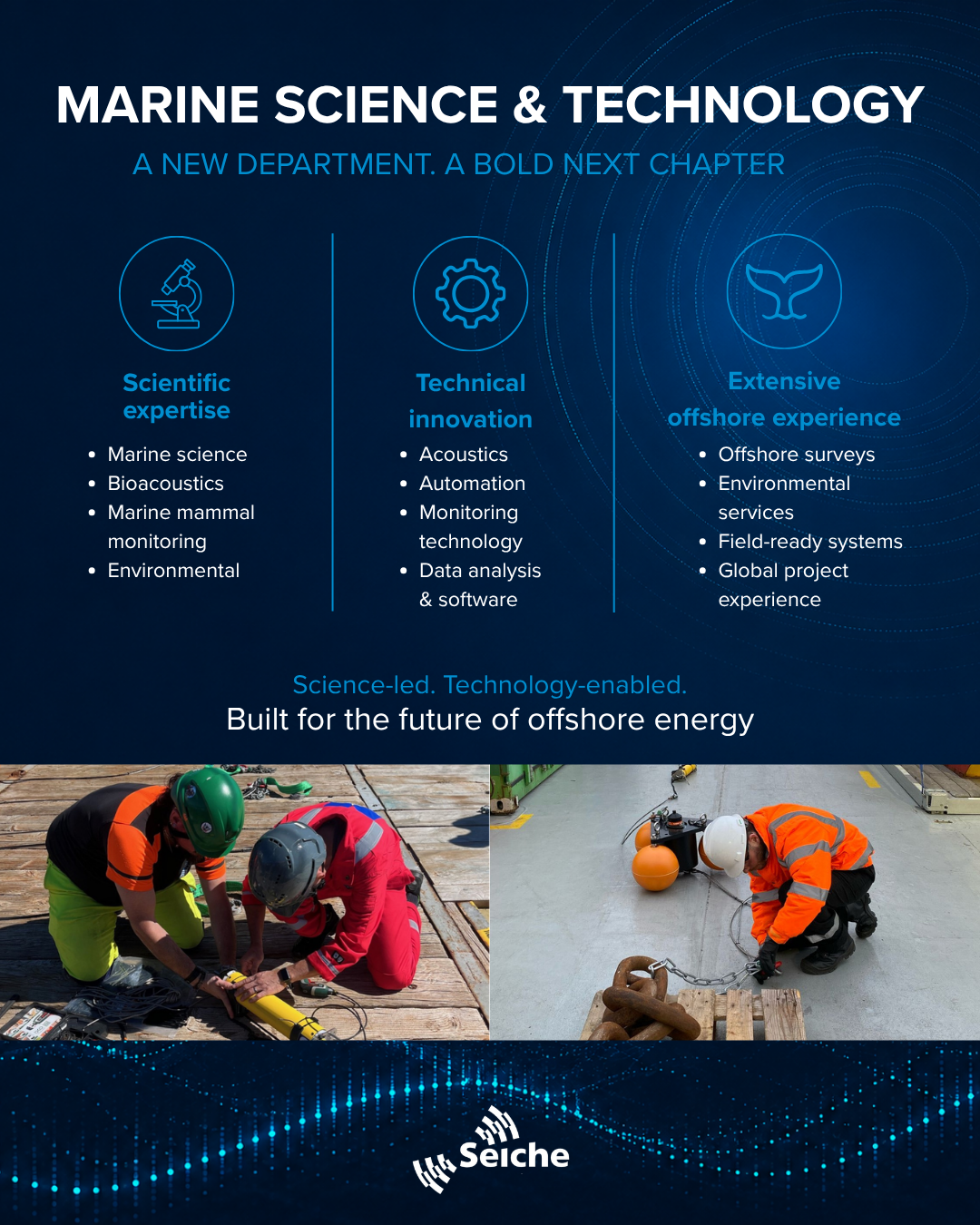
Seiche has launched a new Marine Science & Technology Department, bringing together specialist expertise in marine ecology, underwater acoustics, passive acoustic monitoring (PAM), data analytics, and technology innovation.
The new department strengthens Seiche’s scientific and technical capability across the offshore wind, renewable energy, and wider energy sectors, combining decades of marine experience with the development of innovative technologies and practical offshore solutions.
Its multidisciplinary team brings together expertise in marine mammal surveys, underwater noise characterisation, acoustic propagation and source-level modelling, soundscape assessment, bioacoustics, and marine mammal consultancy.
The department will be led across three key areas by Lorenzo Scala, Head of Marine Science; Chris Pierpoint, Head of Bioacoustics; and Robert Lee, Head of Technical Innovation.
Marine Science
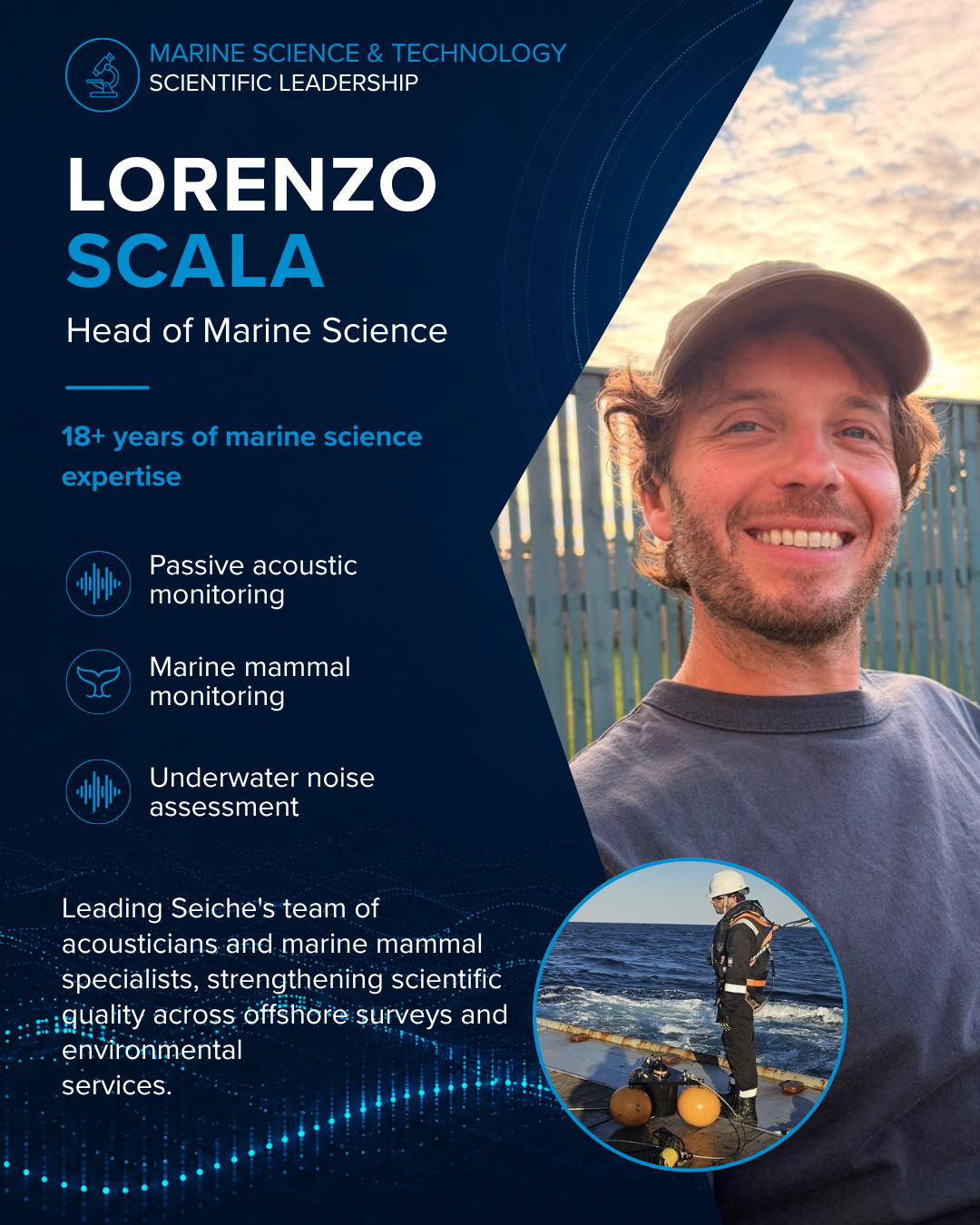
A Chartered Marine Scientist and Fellow of IMarEST, Lorenzo Scala brings more than 18 years of experience in passive acoustic monitoring, marine mammal monitoring, and underwater noise assessment across the offshore industry.
As Head of Marine Science, Lorenzo will lead Seiche’s team of acousticians and marine mammal specialists, providing technical leadership and oversight across offshore surveys while strengthening scientific quality and supporting robust and efficient project delivery.
His experience at the intersection of marine science, technology and offshore development will also play a significant role in the department’s continued development and innovation.
Lorenzo said: “I’m excited to take on the role of Head of Marine Science and lead a talented team of marine mammal and acoustic specialists. My focus will be on combining strong science, innovative technology and practical offshore experience to deliver high-quality marine environmental solutions that support the continued growth of the business.”
Bioacoustics
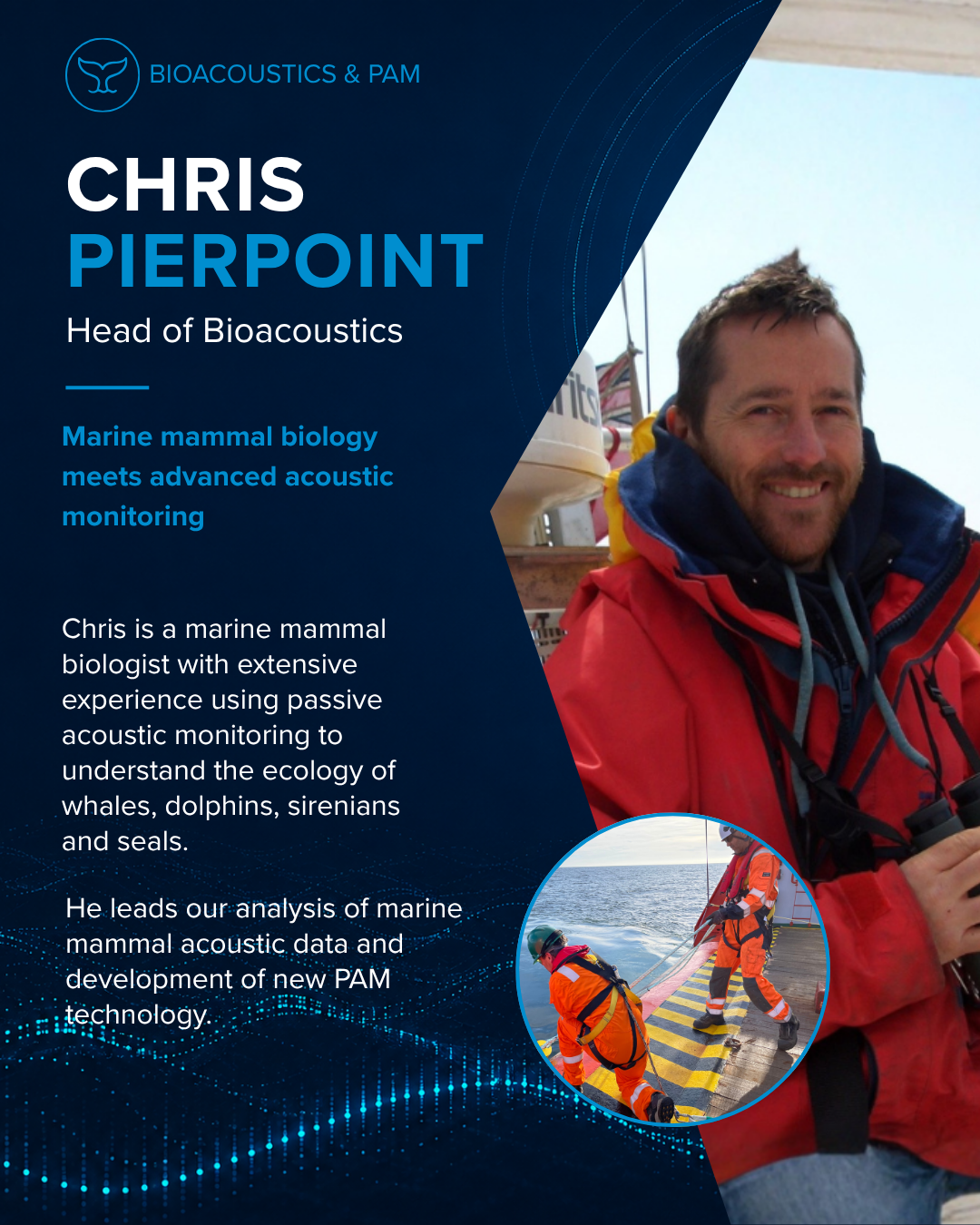
Chris Pierpoint, Head of Bioacoustics, is a marine mammal biologist with extensive experience using PAM to provide insights into the ecology of whales, dolphins, sirenians, and seals.
Chris leads Seiche’s analysis of marine mammal acoustic data and contributes to the development of new PAM technology designed to record and analyse marine mammal vocalisations.
His current work includes baseline surveys and density estimation for harbour porpoises in the UK North Sea and Australian humpback dolphins in West Papua, Indonesia, demonstrating the international scope of the scientific work being undertaken within the department.
Technical Innovation
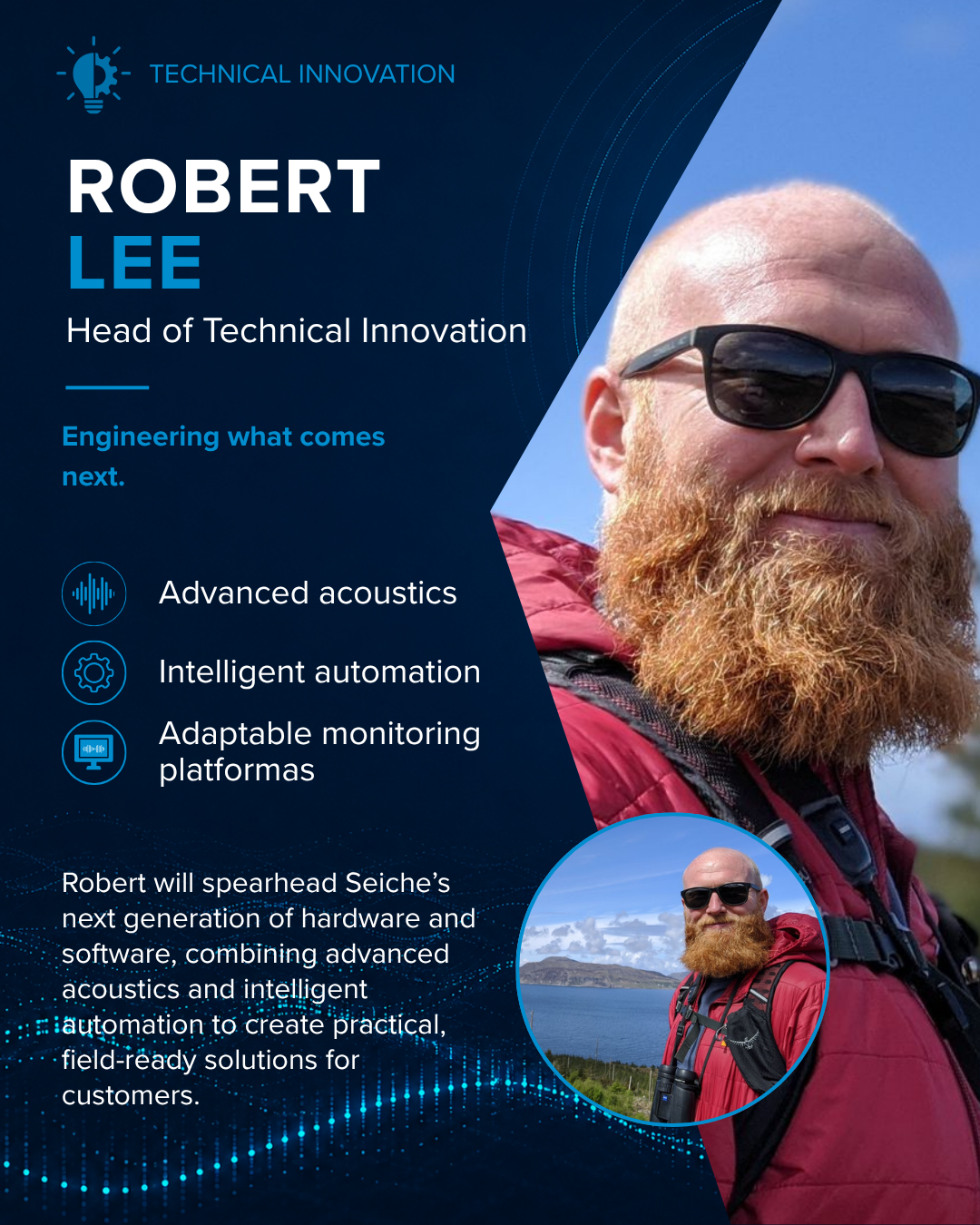
As Head of Technical Innovation, Robert Lee will spearhead the next generation of Seiche hardware and software development for the environmental sector.
Robert’s focus will be on bringing together advanced acoustics, intelligent automation, and adaptable monitoring platforms to develop practical new capabilities for Seiche and its customers.
Robert said: “It is an incredibly exciting time to help shape Seiche’s next chapter. We have some fantastic engineering expertise within the business and a real opportunity to turn ambitious ideas into effective, field-ready systems.”
Bringing science and technology together
The new department creates a closer connection between Seiche’s scientific expertise, offshore experience, and technology development.
By bringing marine scientists, acousticians, marine mammal specialists, data expertise and technical innovation together, Seiche can continue developing evidence-led solutions that respond to the increasingly complex environmental requirements of offshore projects.
The department’s work will be underpinned by marine regulations, ISO standards and industry best practice, supporting clients in understanding, monitoring, and managing their impact on the marine environment.
For Seiche, the new Marine Science & Technology Department represents both an expansion of its scientific capability and an opportunity to build on almost 30 years of experience in marine environmental monitoring and technology.
Science-led. Technology-enabled. Built for the future of offshore energy.