Seiche is pleased to have supported newly published research examining the effects
of vessel traffic on harbour porpoise behaviour in a high-traffic coastal environment.
The manuscript, written by Rachel Lennon and Shannon Merkle with co-authors
Jonas Teilmann, and from Seiche: Chris Pierpoint and Lorenzo Scala. Published in
Marine Mammal Science, draws on long-term passive acoustic monitoring (PAM)
data collected in the Little Belt strait, Denmark. The analysis utilised data from
Seiche’s cable-to-shore PAM system at Middelfart, enabling continuous monitoring of
porpoise echolocation behaviour alongside detailed vessel traffic records.
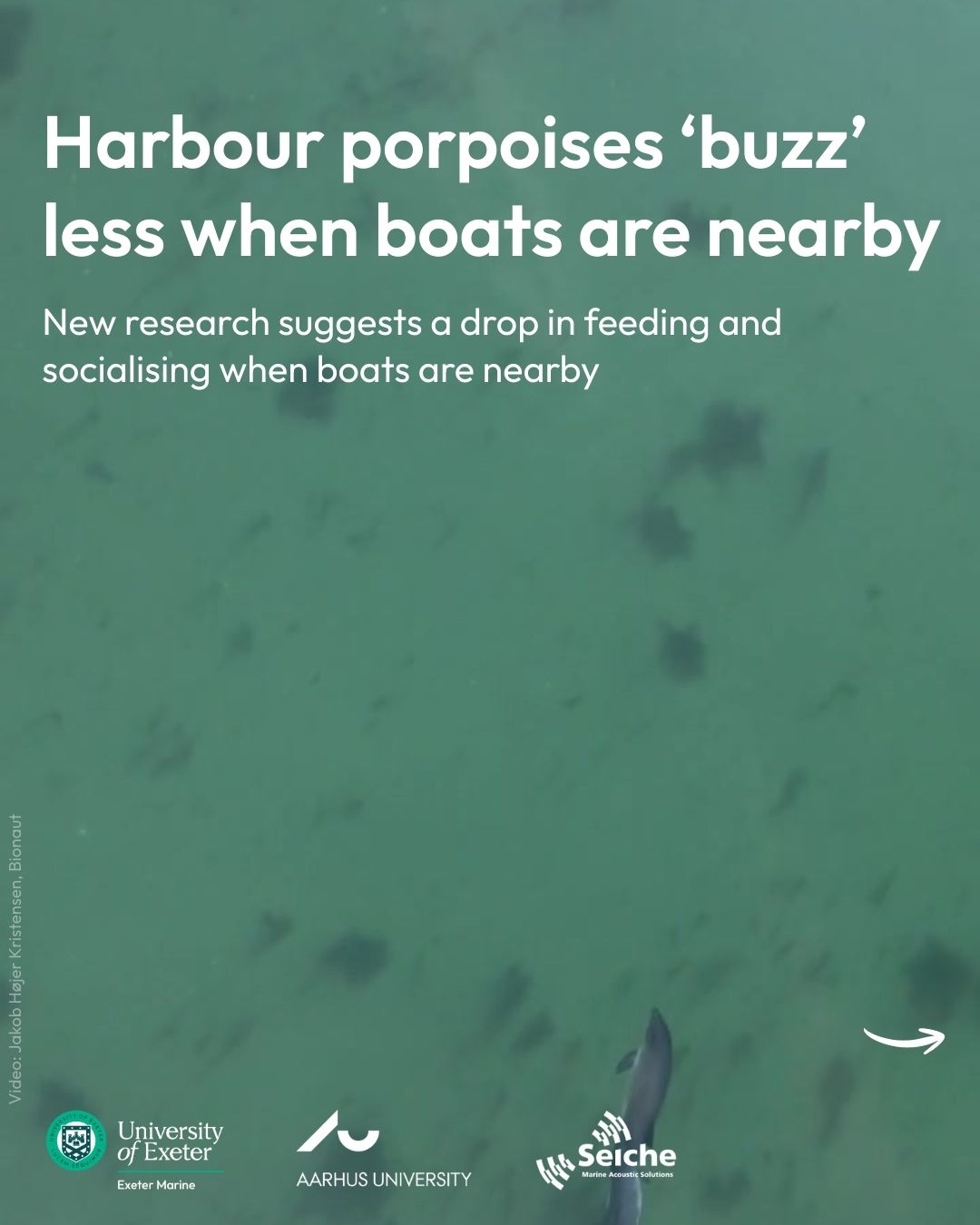
By comparing porpoise acoustic detections with periods of vessel traffic, the
researchers found that harbour porpoises “buzzed” less when boats and ships were
nearby. Buzzes are short sounds used by porpoises when feeding and socialising,
and reductions of up to 45% were observed during the busiest vessel traffic periods,
particularly during summer daytime hours when the Little Belt is most active.
Harbour porpoises have a rapid metabolism and feed almost constantly, meaning
reductions in feeding and social activity could have important implications. The study
notes that the Little Belt is used by an endangered population of harbour porpoises,
and that chronic vessel traffic in this narrow strait may therefore be of particular
concern.
The study adds to a growing understanding of how underwater noise and increasing
vessel traffic affect the marine environment, particularly noise-sensitive species such
as harbour porpoises. The researchers note that measures including reduced vessel
speeds and consideration of vessel numbers and distribution in protected areas
could help to limit disturbance.
Seiche is proud to support collaborative, science-driven research that advances
understanding of anthropogenic impacts on the marine environment and contributes
evidence to support sustainable use of coastal waters.