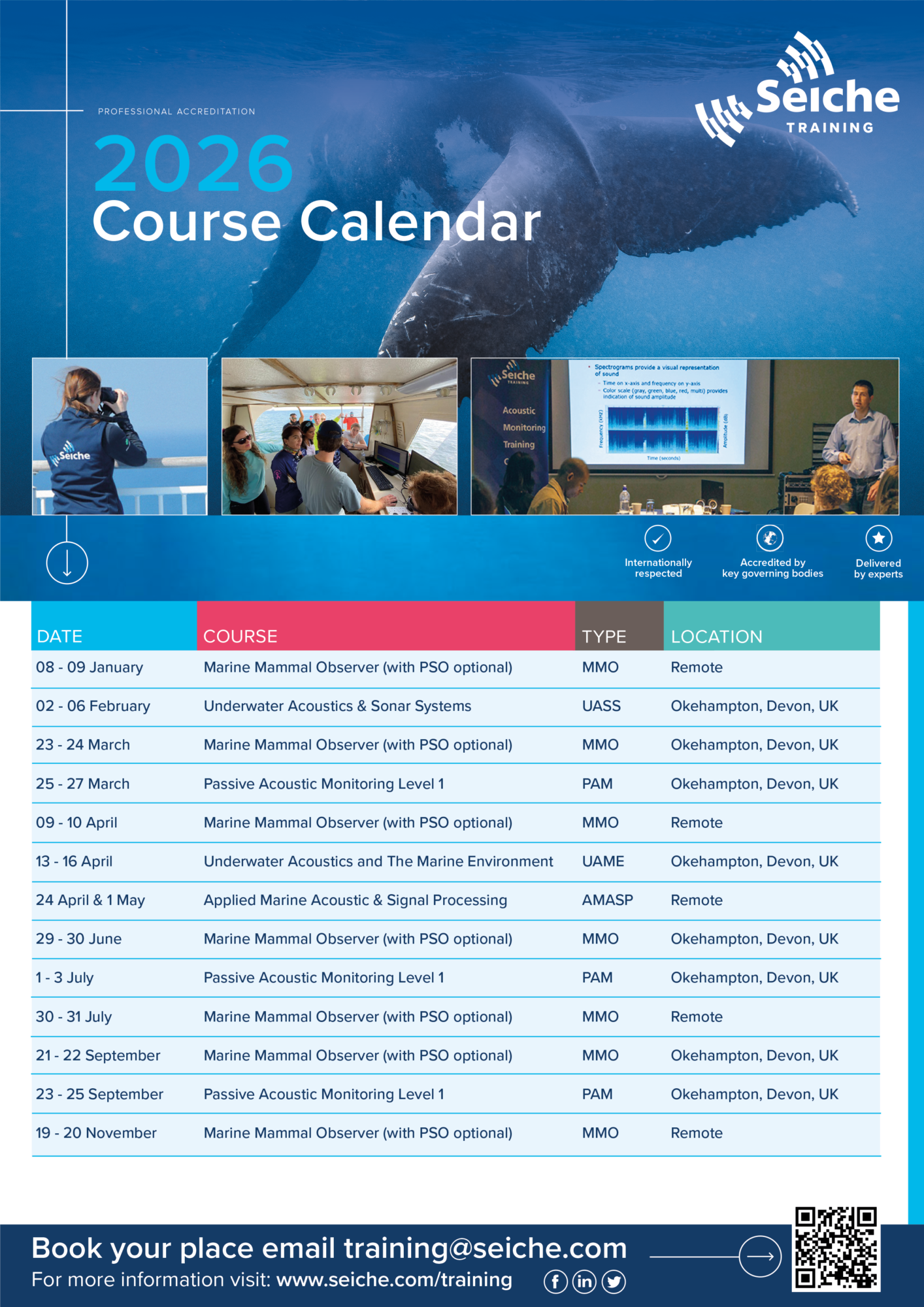
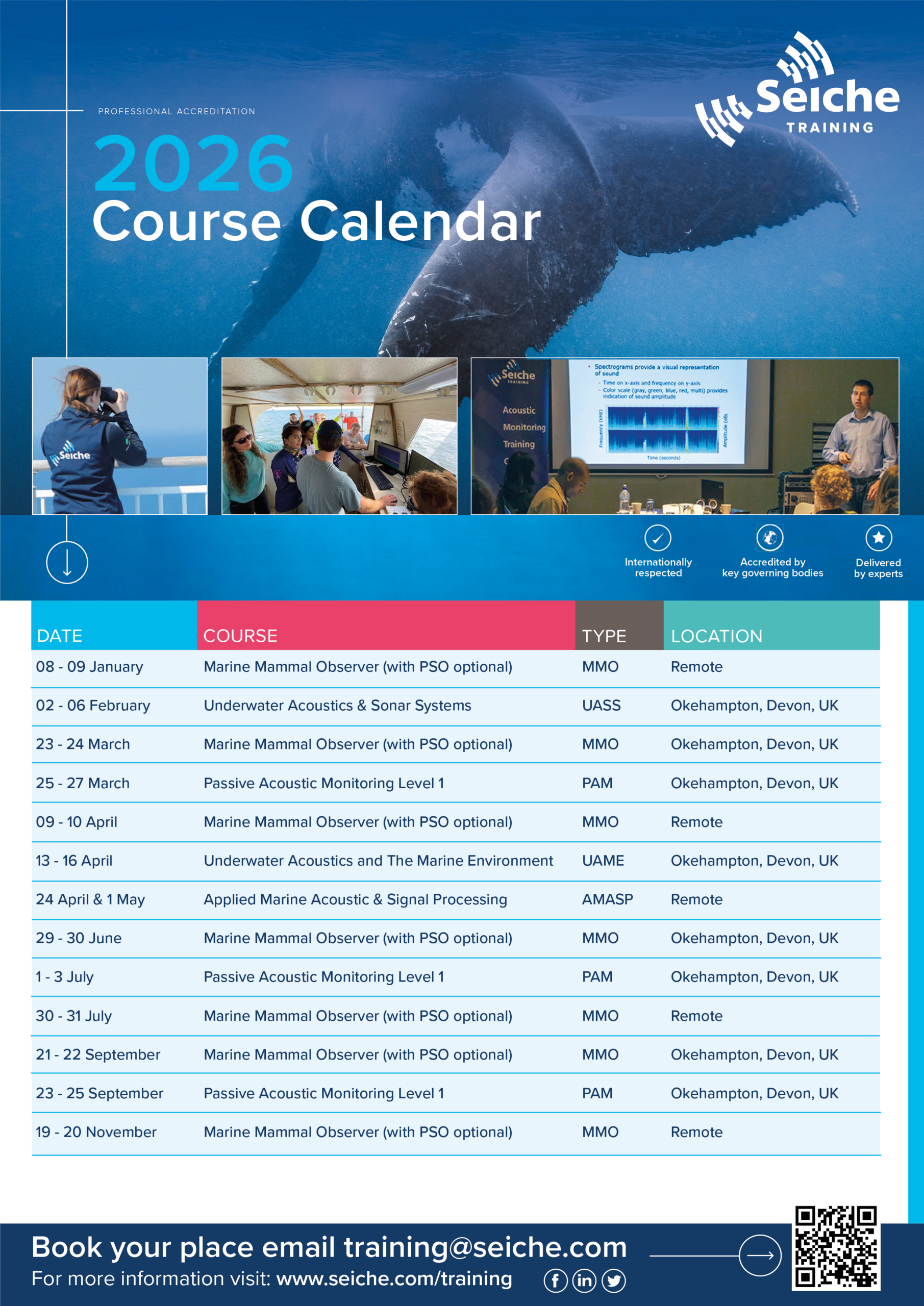
Seiche launches new Marine Science & Technology Department 

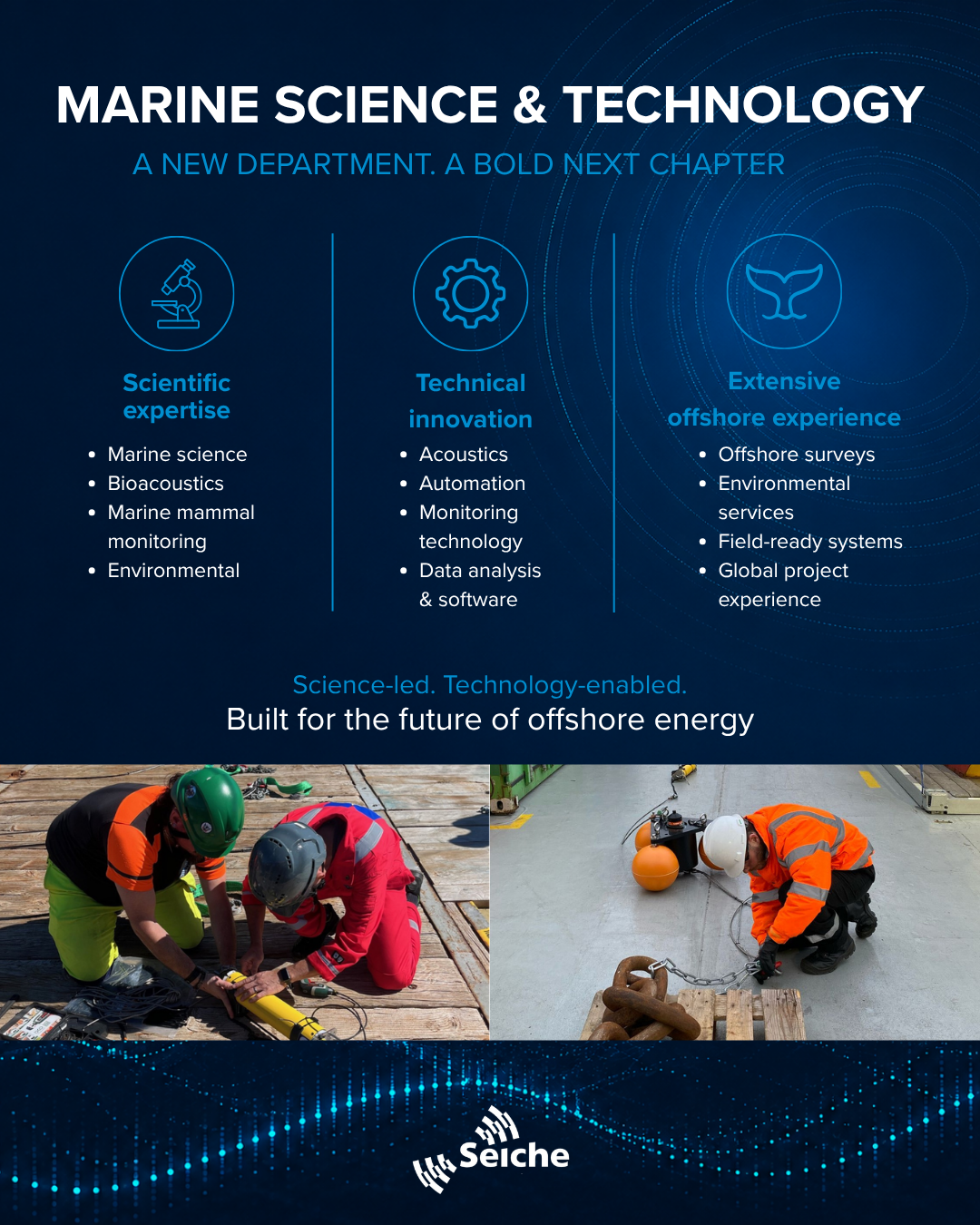
Seiche has launched a new Marine Science & Technology Department, bringing together specialist expertise in marine ecology, underwater acoustics, passive acoustic monitoring (PAM), data analytics, and technology innovation. 

The new department strengthens Seiche’s scientific and technical capability across the offshore wind, renewable energy, and wider energy sectors, combining decades of marine experience with the development of innovative technologies and practical offshore solutions. 

Its multidisciplinary team brings together expertise in marine mammal surveys, underwater noise characterisation, acoustic propagation and source-level modelling, soundscape assessment, bioacoustics, and marine mammal consultancy. 

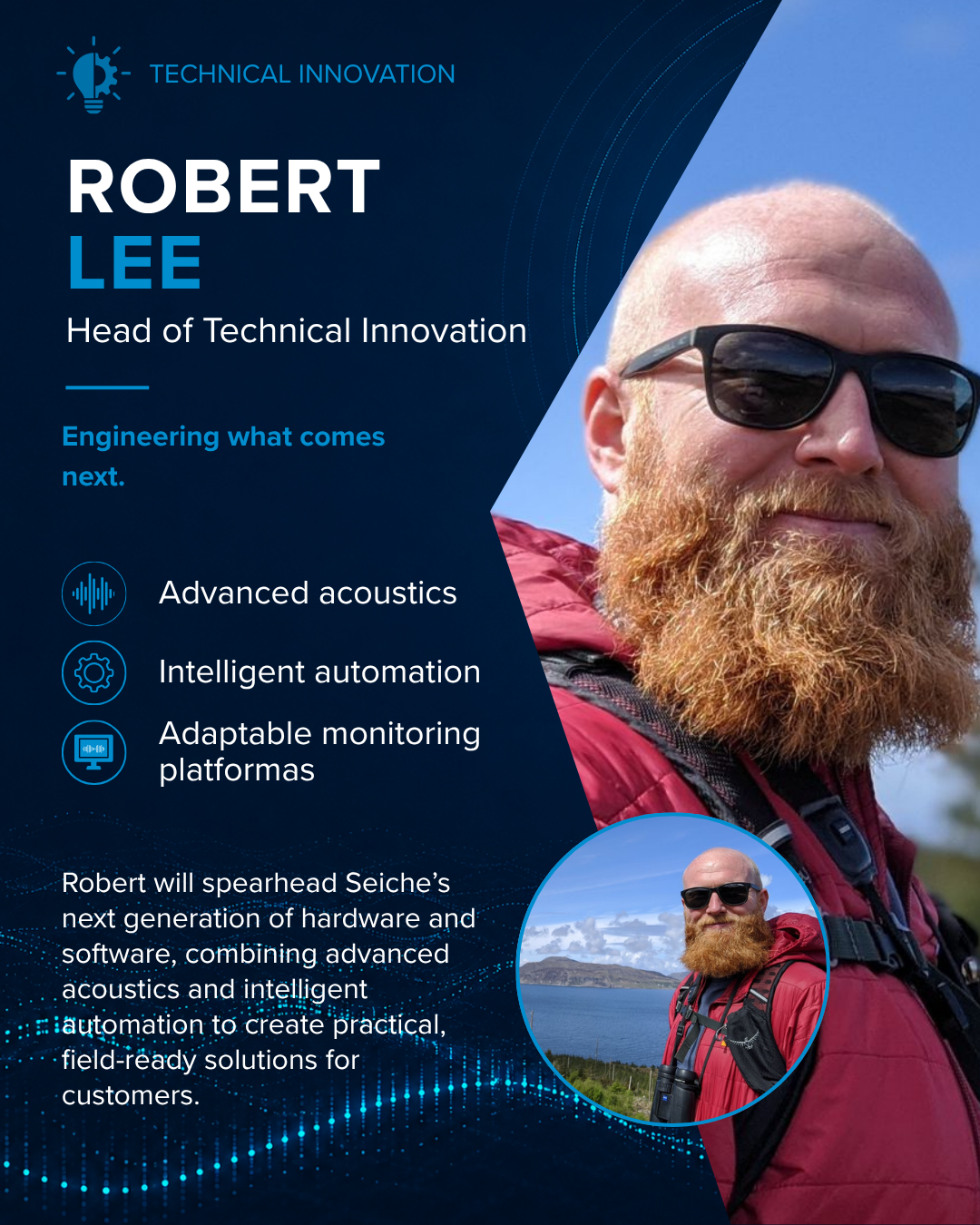
The department will be led across three key areas by Lorenzo Scala, Head of Marine Science; Chris Pierpoint, Head of Bioacoustics; and Robert Lee, Head of Technical Innovation. 
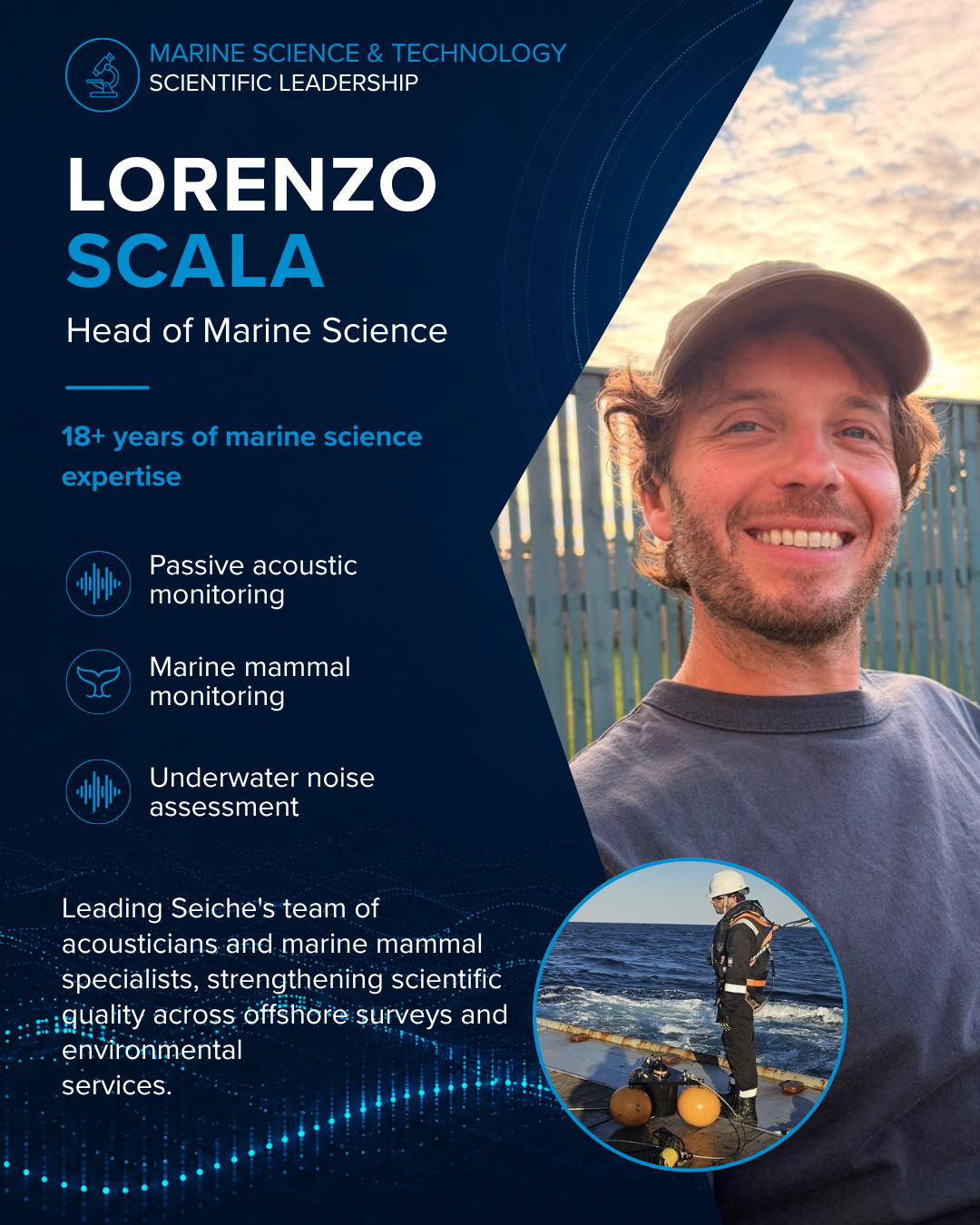

Marine Science

A Chartered Marine Scientist and Fellow of IMarEST, Lorenzo Scala brings more than 18 years of experience in passive acoustic monitoring, marine mammal monitoring, and underwater noise assessment across the offshore industry. 

As Head of Marine Science, Lorenzo will lead Seiche’s team of acousticians and marine mammal specialists, providing technical leadership and oversight across offshore surveys while strengthening scientific quality and supporting robust and efficient project delivery. 

His experience at the intersection of marine science, technology and offshore development will also play a significant role in the department’s continued development and innovation. 

Lorenzo said: “I’m excited to take on the role of Head of Marine Science and lead a talented team of marine mammal and acoustic specialists. My focus will be on combining strong science, innovative technology and practical offshore experience to deliver high-quality marine environmental solutions that support the continued growth of the business.” 

Bioacoustics

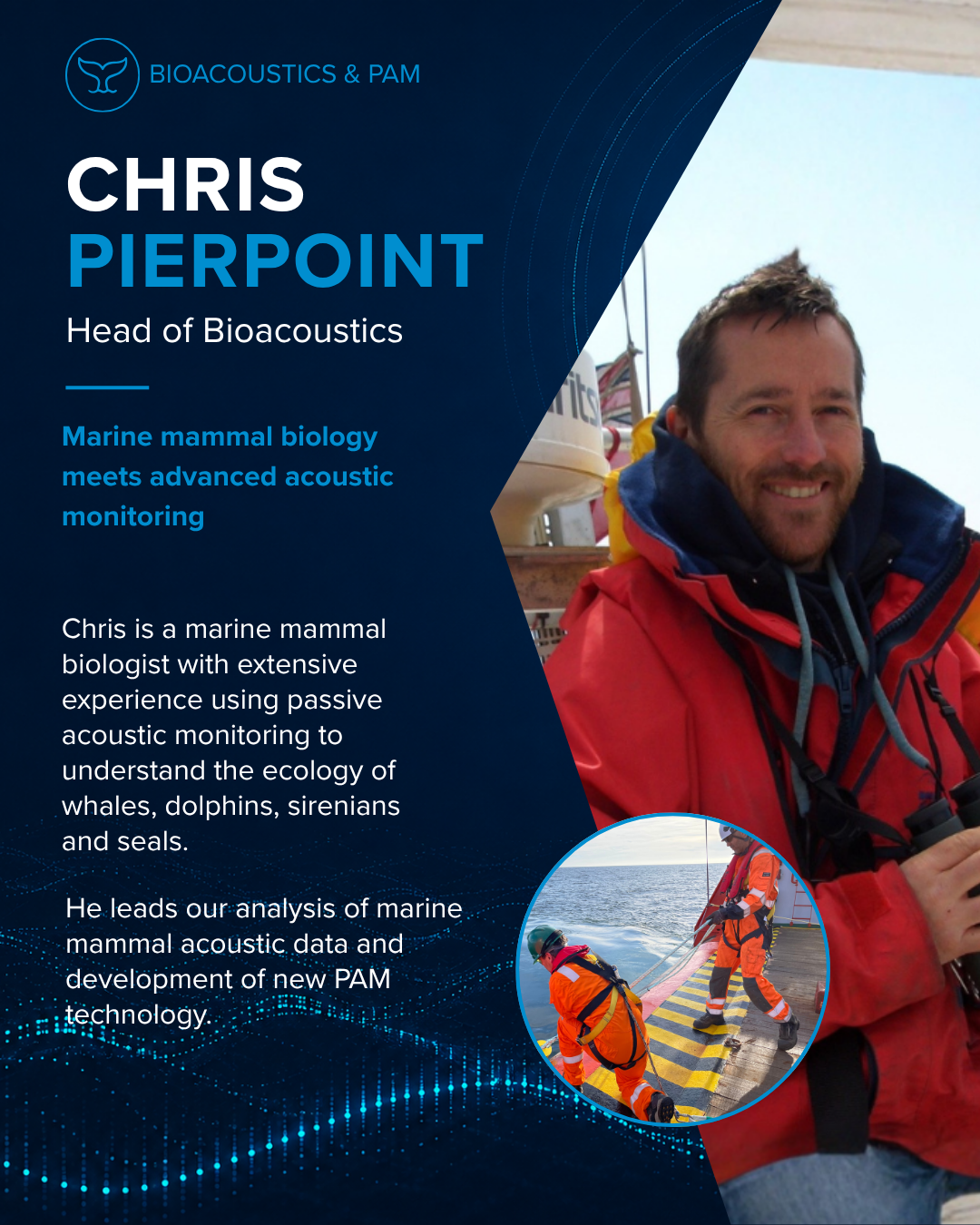
Chris Pierpoint, Head of Bioacoustics, is a marine mammal biologist with extensive experience using PAM to provide insights into the ecology of whales, dolphins, sirenians, and seals. 

Chris leads Seiche’s analysis of marine mammal acoustic data and contributes to the development of new PAM technology designed to record and analyse marine mammal vocalisations. 

His current work includes baseline surveys and density estimation for harbour porpoises in the UK North Sea and Australian humpback dolphins in West Papua, Indonesia, demonstrating the international scope of the scientific work being undertaken within the department. 
Technical Innovation

As Head of Technical Innovation, Robert Lee will spearhead the next generation of Seiche hardware and software development for the environmental sector. 

Robert’s focus will be on bringing together advanced acoustics, intelligent automation, and adaptable monitoring platforms to develop practical new capabilities for Seiche and its customers. 

Robert said: “It is an incredibly exciting time to help shape Seiche’s next chapter. We have some fantastic engineering expertise within the business and a real opportunity to turn ambitious ideas into effective, field-ready systems.” 

Bringing science and technology together

The new department creates a closer connection between Seiche’s scientific expertise, offshore experience, and technology development. 

By bringing marine scientists, acousticians, marine mammal specialists, data expertise and technical innovation together, Seiche can continue developing evidence-led solutions that respond to the increasingly complex environmental requirements of offshore projects. 

The department’s work will be underpinned by marine regulations, ISO standards and industry best practice, supporting clients in understanding, monitoring, and managing their impact on the marine environment. 

For Seiche, the new Marine Science & Technology Department represents both an expansion of its scientific capability and an opportunity to build on almost 30 years of experience in marine environmental monitoring and technology. 

Science-led. Technology-enabled. Built for the future of offshore energy. 
Visual Detection System to improve whale detection in Arctic

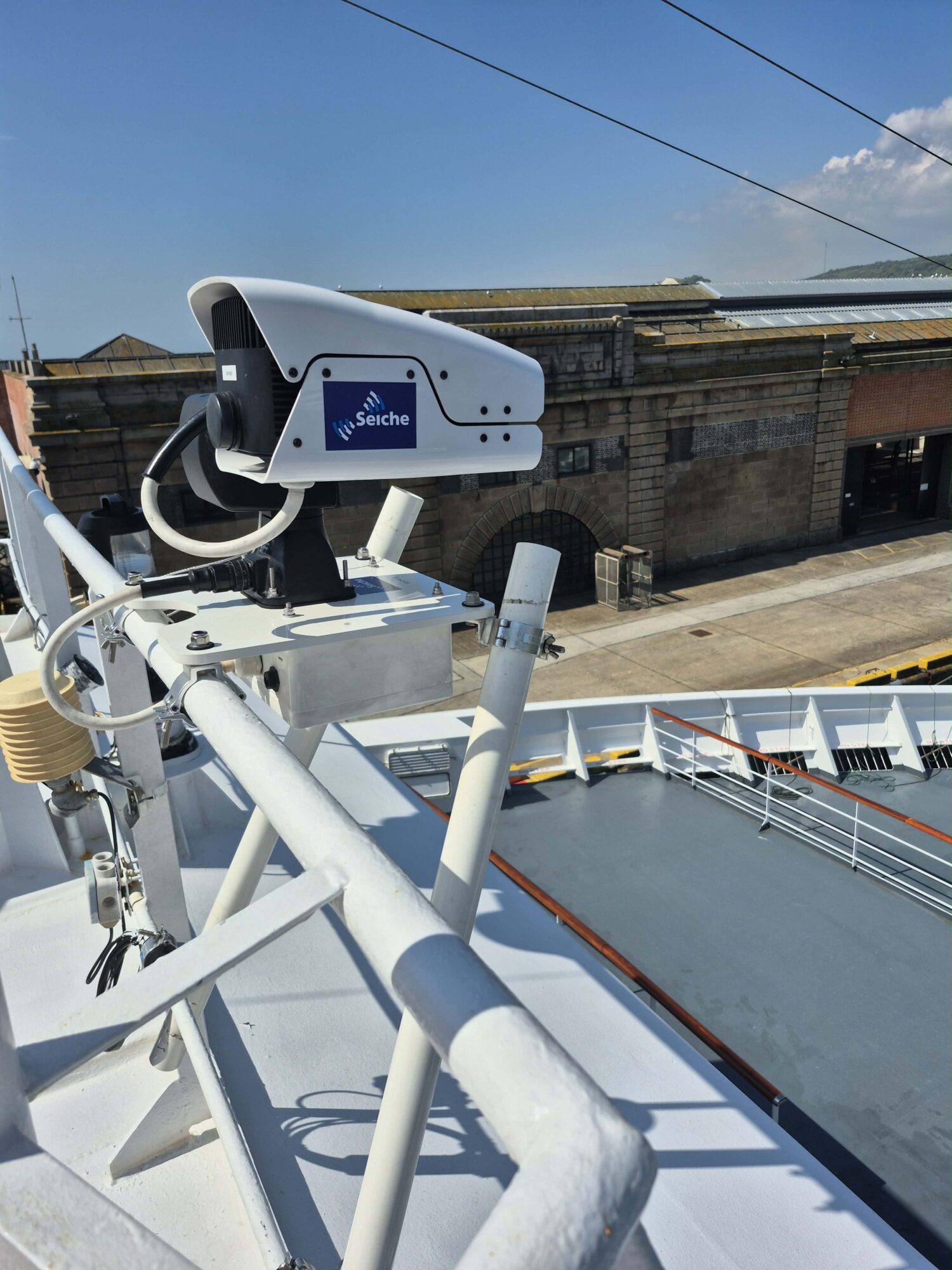
Seiche is pleased to be supporting a collaborative trial project with HX Expeditions and Heriot-Watt University through the deployment of a Smart Visual Detection System (SVDS) onboard HX’s expedition vessel, MS Fram.

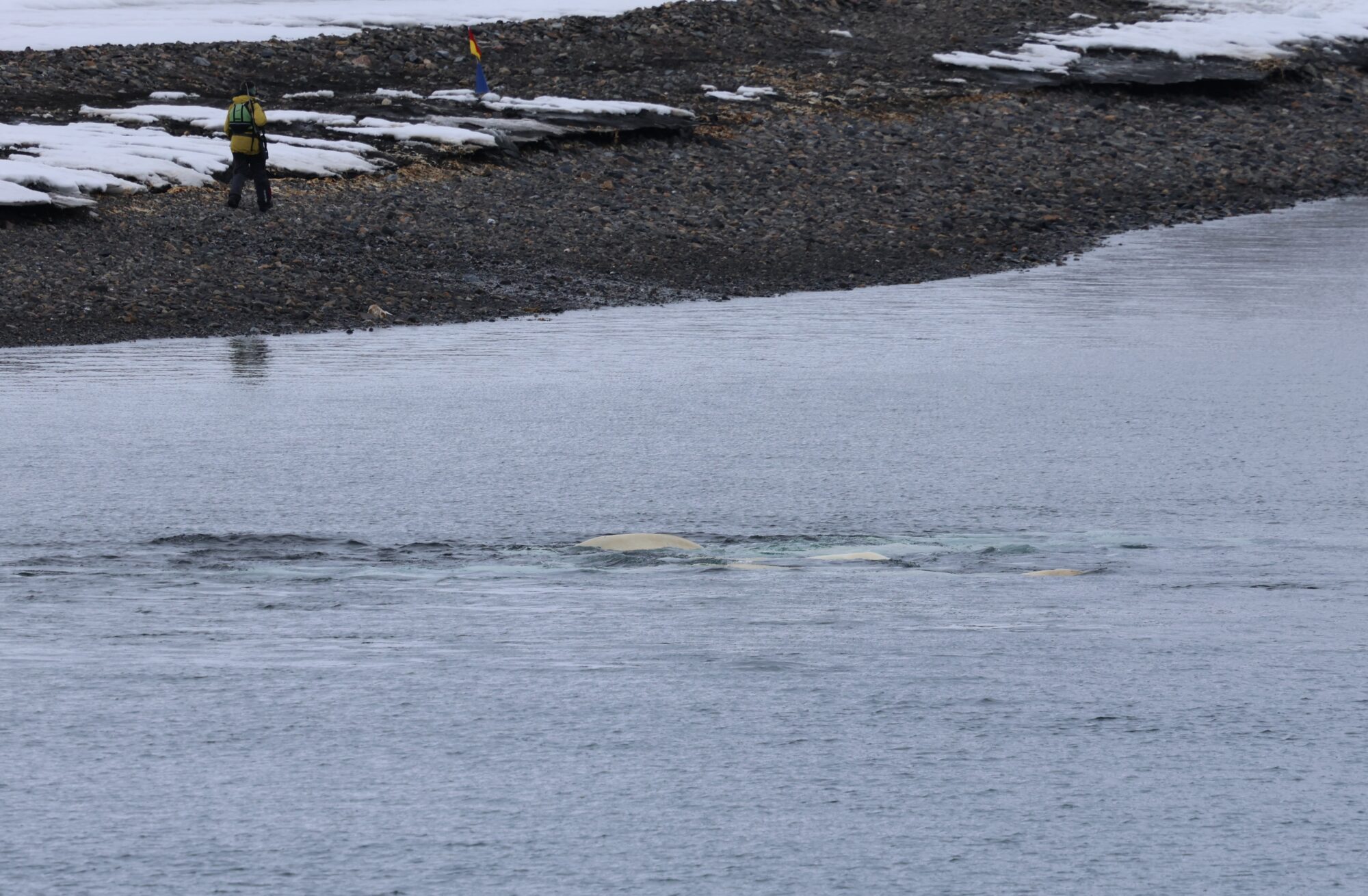
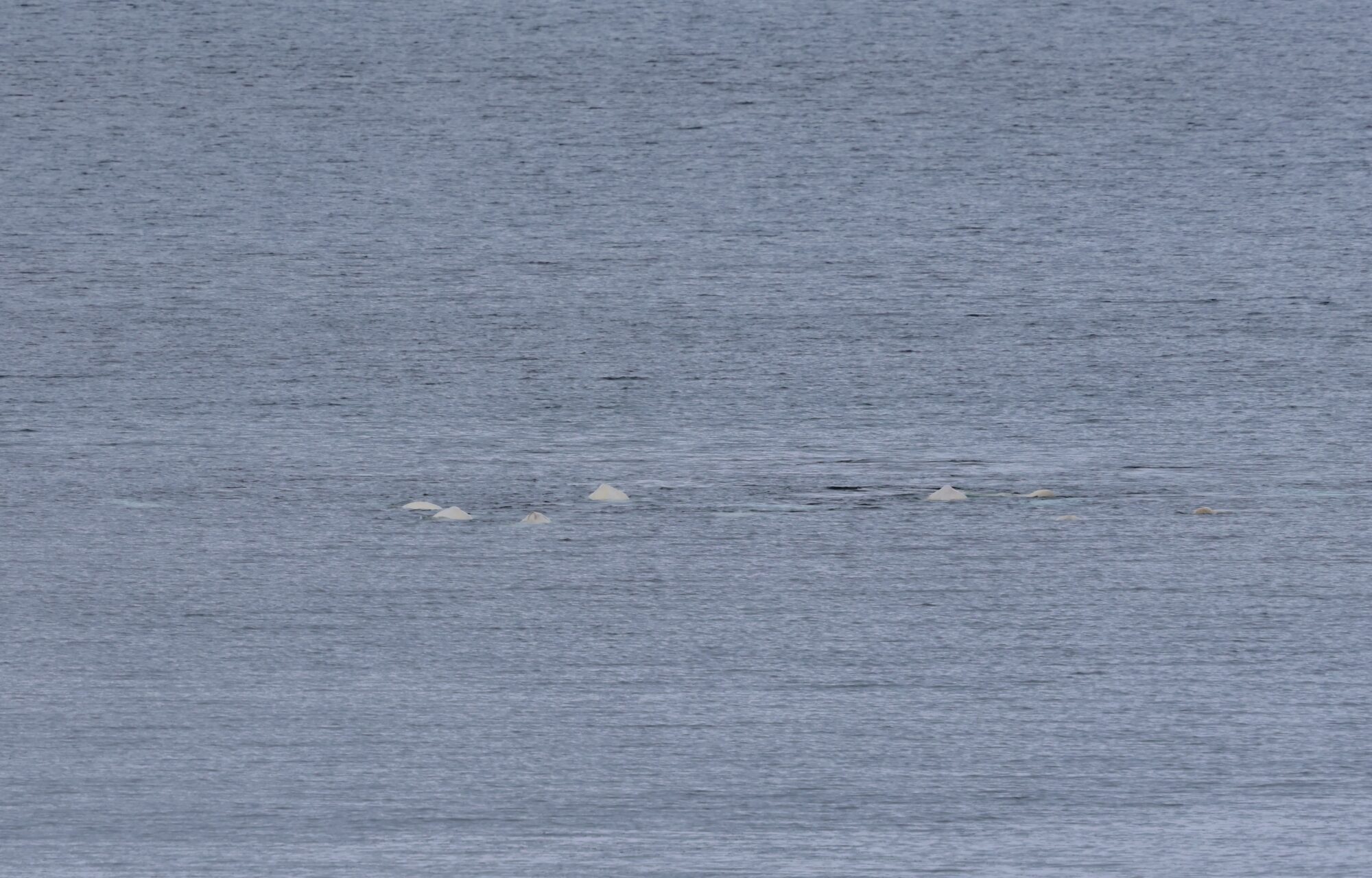
The system has been installed to support the Whales & Arctic VEssels (WAVE) project during Fram’s voyage from Dover to Svalbard and throughout the Arctic summer season. Operated by Heriot-Watt University researchers, the trial will explore how advanced visual detection technologies can enhance marine mammal monitoring in remote and environmentally sensitive regions.

The deployment aims to evaluate the potential for continuous 24/7 data collection onboard vessels, including during periods when conventional visual observations are limited by darkness, weather conditions or researcher availability. The project will also assess how collected imagery and detection data can contribute toward the future development of AI-assisted marine mammal identification and real-time alerting capabilities.

In addition to supporting long-term ecological monitoring, the trial also explores operational and educational applications, including increased situational awareness for vessel crews and enhanced engagement opportunities for expedition guests through recorded wildlife encounters and onboard science activities.

As Arctic activity continues to increase, initiatives such as WAVE are helping to improve understanding of cetacean distribution, behaviour and potential exposure to emerging human pressures in a rapidly changing environment. Seiche is proud to support this important collaboration and contribute to the ongoing development of practical technologies for marine mammal observation, mitigation and conservation.

Photo credit: Thanks to Heriot-Watt University and Whales & Arctic VEssels (WAVE) for kindly allowing us to use these photographs.

SEICHE LEADS PIONEERING PILOT STUDY TO ASSESS OFFSHORE PILING NOISE LIMITS IN ENGLISH AND WELSH WATERS

Seiche, in collaboration with a consortium of leading marine science organisations, is delivering an ambitious pilot programme to assess the feasibility and effectiveness of proposed underwater noise limits from pile driving during the construction of offshore wind farms.

Commissioned by the Department for Environment, Food and Rural Affairs (Defra), the pilot study is being delivered by Seiche as lead contractor, working alongside partners SAMS Enterprise, SMRU Consulting and TNO. The study commenced during piling operations at RWE’s Sofia Offshore Wind Farm and continued at ScottishPower Renewables’ East Anglia THREE Offshore Wind Farm, both of which have adopted noise reduction measures during construction in 2025 and 2026.

This pilot study follows a desk-based feasibility study undertaken by Seiche and Tetra Tech RPS Energy which evaluated realistic noise limit thresholds and designed the programme to test these scenarios in real-world settings.

Using a combination of autonomous underwater recording units (ARUs) and porpoise click detectors (F-PODs), the study will:

  • Assess the effectiveness of various noise abatement technologies under real conditions.
  • Evaluate how achievable the proposed decibel limits are in practice.
  • Improve scientific understanding of marine mammal disturbance, both with and without noise abatement systems (NAS).
  • Document operational experiences with NAS deployment in English and Welsh waters
  • Utilise results to inform future policy and implementation.

Field monitoring is now complete at Sofia Offshore Wind Farm, where a seabed array of passive acoustic monitoring devices was deployed in April 2025 to collect data during the installation of up to ten monopile foundations using a big bubble curtain (BBC) system. The Sofia monitoring programme also complements a wider effort led by SMRU Consulting to monitor porpoise responses during concurrent piling at Dogger Bank C Offshore Wind Farm, being developed and constructed by SSE Renewables. Together, these efforts will build on a larger body of work carried out in the North Sea to help refine our understanding of porpoise responses to piling activity, including effective deterrence ranges (EDRs).

At East Anglia THREE, further data has been gathered during a six-month deployment which began in May 2025, focusing on piling operations using in-line hammer noise reduction technology supplied by MENCK. This builds on an ongoing long-term monitoring programme within the southern North Sea Special Area of Conservation (SAC) for harbour porpoise also led by Seiche and SAMS Enterprise. The aim is to develop a more nuanced dose-response relationship between underwater noise and porpoise behaviour across all phases of offshore wind development, from pre-construction and UXO clearance through to turbine operation.

Seiche and its partners bring unmatched expertise in underwater acoustic monitoring, marine mammal assessment and offshore wind development. With a track record, which includes more than 2,000,000 operational days at sea and strong relationships with industry and regulators the consortium will deliver key results underpinned by cutting edge science and contribute key confidence to our growing knowledge towards the management of future offshore developments.

The pilot study forms part of the Offshore Wind Evidence and Change programme, led by The Crown Estate in partnership with the Department for Energy Security and Net Zero and the Department for Environment, Food & Rural Affairs. The Offshore Wind Evidence and Change programme is an ambitious strategic research and data-led programme. Its aim is to facilitate the sustainable and coordinated expansion of offshore wind to help meet the UK’s commitments to low carbon energy transition whilst supporting clean, healthy, productive and biologically diverse seas.

Roy Wyatt, CEO of Seiche Water Technology Group said:

“We’re proud to lead this vital pilot programme in collaboration with some of the most respected marine science organisations. This clearly demonstrates what can be achieved when we work together. As the offshore wind industry expands, it is essential that noise management measures are both practical and underpinned by sound science. This work will provide the robust evidence base needed to support future policy and help protect marine life in our seas.”

Porpoises ‘buzz’ less when boats are nearby!

Seiche is pleased to have supported newly published research examining the effects
of vessel traffic on harbour porpoise behaviour in a high-traffic coastal environment.


The manuscript, written by Rachel Lennon and Shannon Merkle with co-authors
Jonas Teilmann, and from Seiche: Chris Pierpoint and Lorenzo Scala. Published in
Marine Mammal Science, draws on long-term passive acoustic monitoring (PAM)
data collected in the Little Belt strait, Denmark. The analysis utilised data from
Seiche’s cable-to-shore PAM system at Middelfart, enabling continuous monitoring of
porpoise echolocation behaviour alongside detailed vessel traffic records.


By comparing porpoise acoustic detections with periods of vessel traffic, the
researchers found that harbour porpoises “buzzed” less when boats and ships were
nearby. Buzzes are short sounds used by porpoises when feeding and socialising,
and reductions of up to 45% were observed during the busiest vessel traffic periods,
particularly during summer daytime hours when the Little Belt is most active.


Harbour porpoises have a rapid metabolism and feed almost constantly, meaning
reductions in feeding and social activity could have important implications. The study
notes that the Little Belt is used by an endangered population of harbour porpoises,
and that chronic vessel traffic in this narrow strait may therefore be of particular
concern.


The study adds to a growing understanding of how underwater noise and increasing
vessel traffic affect the marine environment, particularly noise-sensitive species such
as harbour porpoises. The researchers note that measures including reduced vessel
speeds and consideration of vessel numbers and distribution in protected areas
could help to limit disturbance.


Seiche is proud to support collaborative, science-driven research that advances
understanding of anthropogenic impacts on the marine environment and contributes
evidence to support sustainable use of coastal waters.

Offshore Wind Growth Partnership

Seiche are excited to announce that we have been selected by the Offshore Wind Growth Partnership to participate in the OWGP Sharing in Growth Programme following our recent engagement in the OWGP Sprint programme earlier this year.

Both programmes are designed to transform business processes in supply chain companies who are critical to the growth of Offshore Wind in the UK. This is delivered through intensive and bespoke support, business coaching and strategy development.

Seiche are grateful for the support provided so far from the Sharing in Growth team and the faith from Offshore Wind Growth Partnership in our business as an important supply chain company both in the UK and for global markets.

Seiche Welcomes Dan Hook as Non-Executive Director

Seiche is delighted to announce the appointment of Dan Hook as Non-Executive Director,
effective 2 January 2025.


Dan brings a wealth of experience and expertise in marine technology and innovation to Seiche. A
Naval Architect by training, he studied at the University of Southampton before embarking on a
diverse career encompassing fast vessel design, weight and stability analysis, and structural
engineering.


His passion for marine robotics led him to become a Chartered Engineer and establish ASV Ltd, a
pioneering company in the development and construction of unmanned surface vessels.
Following the sale of ASV Ltd to L3 Harris, Dan served as Chief Technology Officer at Ocean
Infinity for four years. He now leads RAD Propulsion, a company dedicated to advancing
technology for electric and smart boats.

In addition to his industry roles, Dan has contributed significantly to marine science as a Non-
Executive Director of the National Oceanography Centre over the past six years.

We are thrilled to have Dan on board and look forward to the valuable insights and leadership he
will bring to Seiche.

David Hedgeland joins Seiche as Associate Director

We are pleased to announce that David Hedgeland has joined Seiche Ltd in a new Associate Director role on a part time basis. In this role, David will provide invaluable technical advice and guidance on underwater sound, marine monitoring, technology, and communications.

David has over 30 years of experience in the offshore energy industry, initially working offshore implementing seismic surveys, followed by over 20 years being engaged in international scientific and regulatory discussions related to underwater sound emissions from both traditional hydrocarbon and more recently renewable energy offshore activities and potential interactions with marine species and habitats.

David’s wealth of knowledge and industry insight will be a tremendous asset as we continue to drive innovation and excellence in marine monitoring and environmental stewardship. Welcome aboard, David!

Moray West Offshore Wind Project

Exciting News from Seiche: Partnering with Ocean Winds on the Moray West Offshore Wind Project!

We’re thrilled to share some great news: the first wind turbine has been installed at Moray West! It’s been an incredible journey for us, with months of hard work from our dedicated team. Together, we successfully monitored the installation of 62 monopiles for the offshore wind farm in the outer Moray Firth, Scotland.

But that’s not all – our involvement extended to comprehensive noise monitoring during installation. We meticulously analysed the data, providing detailed analysis and reporting every step of the way. This project truly reflects our dedication to long-term noise monitoring and our ability to tailor solutions to fit our clients’ needs.

Stay tuned for more updates as we uncover fascinating insights from the data collected during this project!

Photo credit: Deme Group

New Product Launch! RTSM Buoy

Launched at Oceanology 2024, our Real-Time Sound Measurement Buoy is a remote monitoring system that can collect, measure, process and transmit noise monitoring data in real-time.


Our RTSM buoy is a lightweight, compact and scalable solution to collecting noise monitoring data. Data is collected in real-time via a hydrophone deployed beneath the remote buoy, making the set-up, management and collection of data seamless in real time.

Applications include:

  • Monitoring of offshore pile driving noise
  • Real time monitoring of compliance with noise limits
  • Live management of acoustic emissions during piling

Download our datasheet here for more information.